
Historical origins
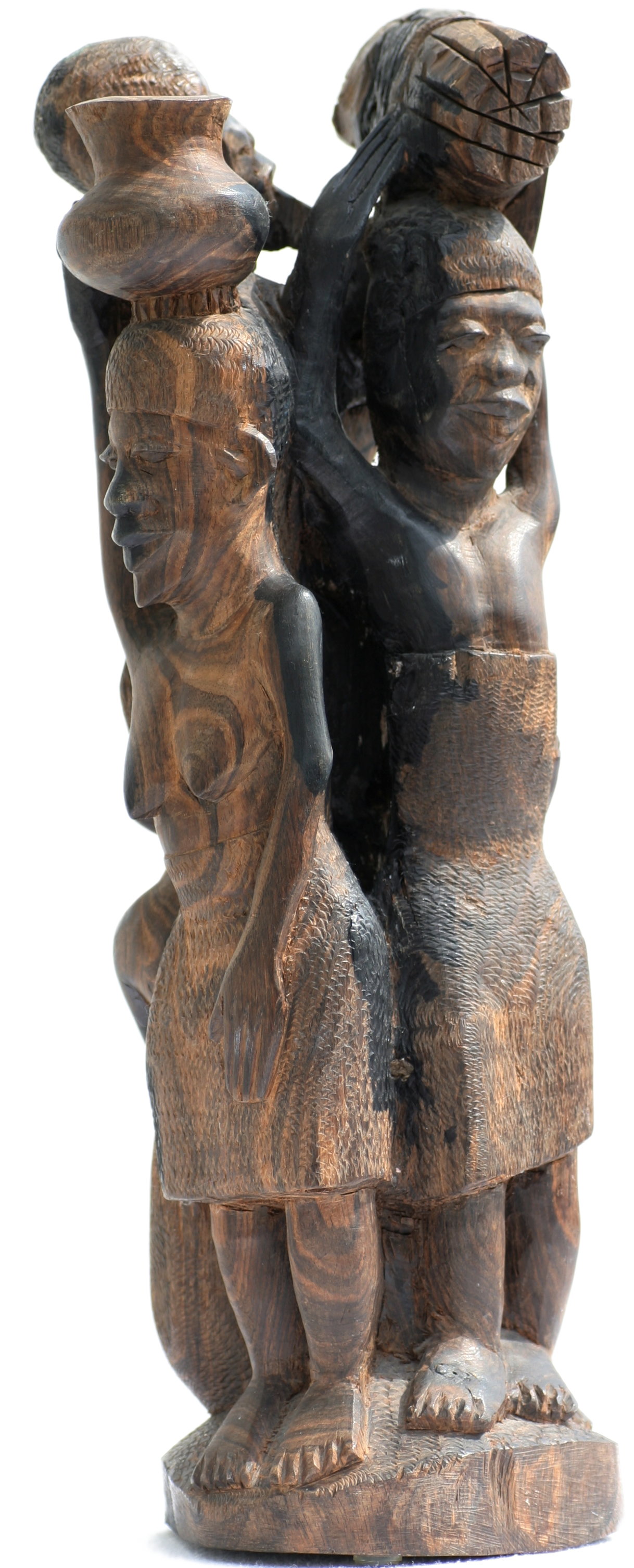
The Makonde people inhabit the elevated Mueda Plateau that straddles the border between southeastern Tanzania and northern Mozambique. They have been accomplished woodcarvers for centuries, traditionally producing masks for mapiko initiation dances, utilitarian objects, and small figurative sculptures. However, the monumental "Tree of Life" or Ujamaa sculptures that have become their most internationally recognized art form are a relatively modern development, emerging in the 1950s and 1960s during a period of rapid social and political change. The Ujamaa form takes its name from the Swahili word for "familyhood" or "extended family," later adopted by Tanzania's first president Julius Nyerere as the name for his vision of African socialism. These remarkable carvings depict dozens or even hundreds of intertwined human figures spiraling upward from a single base, creating towering columnar compositions that can reach heights of one to two meters. The figures climb upon one another's shoulders, interlock limbs, and merge into a unified organic mass that visually embodies the Makonde concept of communal interdependence and ancestral continuity.
Discovery and global recognition
The transformation of Makonde carving from a local craft tradition into an internationally recognized art form began in the late colonial period. In the 1950s, a Mozambican Makonde carver named Samaki is often credited with creating the first Ujamaa-style sculpture, though the innovation likely involved several artists working in dialogue with one another. The catalyst for wider recognition came when Mohamed Peera, an Indian-Tanzanian art dealer based in Dar es Salaam, began commissioning and promoting Makonde carvings to an international audience in the 1960s. The European art market quickly took notice, and by the 1970s, Makonde sculptures were featured in major galleries and collections across Europe and North America. The Kibo Art Gallery in Dar es Salaam became an important center for the trade. Simultaneously, Makonde carvers in Mozambique were developing their own distinctive modernist style — the so-called Shetani (spirit) sculptures — under the influence of artists like Roberto Yakobo Sangwani and Nkatunga. Museum exhibitions in Germany, Switzerland, and the United States throughout the 1980s and 1990s cemented the Makonde reputation as one of Africa's foremost carving traditions.
Cultural significance
The Tree of Life sculptures carry profound meaning within Makonde cosmology and social philosophy. The Makonde trace descent through the matrilineal line, and their origin mythology centers on a primordial female figure from whom all Makonde descend. In the Ujamaa carvings, this founding ancestor typically forms the base of the composition, with successive generations rising above her in an ever-expanding family tree. The intertwining of figures represents the Makonde understanding that individual identity is inseparable from community — each person exists through their relationships with others, and the strength of the whole depends on the connections between its parts. This philosophy resonated powerfully with the pan-African political movements of the post-independence era, giving the sculptures a dual significance as both traditional cultural expression and contemporary political statement. The Shetani style, by contrast, draws on Makonde spirit beliefs, depicting the supernatural beings that inhabit the bush and interact with humans through dreams and possession. These contorted, elongated figures express the uncanny and unpredictable nature of the spirit world.
Authentication and appraisal
The primary material for fine Makonde carving is mpingo, African blackwood (Dalbergia melanoxylon), one of the densest and most valuable hardwoods in the world. Authentic mpingo carvings are immediately recognizable by the wood's extraordinary density — it sinks in water — its deep purplish-black heartwood, and the fine grain that accepts a brilliant natural polish without any applied finish. The first test of quality is the material itself: genuine blackwood has a weight and solidity that lighter substitute woods cannot match. Master carvers work with hand tools — chisels, gouges, and adzes — and the tool marks visible on less-polished surfaces provide evidence of hand craftsmanship versus machine production. On a Tree of Life sculpture, the quality indicators include the complexity and depth of the composition, the individuality and expressiveness of each figure, the skill of the undercutting that creates spatial depth between figures, and the overall coherence of the design. Signature artists are now recognized within the tradition, and works by documented masters like John Fundi, Chanuo Maundu, and Clemente Ngala command premium prices. Provenance to a reputable gallery or documented acquisition adds confidence.
Market value and notable sales
The market for Makonde carvings is stratified by quality, size, material, and artistic attribution. Small tourist-grade carvings in lighter woods are widely available throughout East Africa for $20 to $200. Genuine blackwood carvings of moderate size and competent craftsmanship typically trade between $500 and $1,500 through African art dealers and galleries. Fine Tree of Life sculptures of significant size — 60 centimeters to one meter in height — carved in quality mpingo by skilled artists, are valued in the $1,500 to $5,000 range. Exceptional large-scale works by recognized master carvers, particularly those with gallery documentation and exhibition history, can command $5,000 to $15,000 or more. The Shetani-style sculptures from Mozambique have developed their own collector following, with fine examples by known artists reaching similar price levels. At auction, Makonde works appear intermittently, with Christie's and Bonhams including them in African art sales. The market has been steady rather than spectacular, reflecting the relatively recent vintage of most available works and the ongoing production that keeps supply accessible. However, early works from the 1960s and 1970s by pioneering carvers are increasingly sought after as historical documents of an important artistic movement.
What collectors should know
Collectors interested in Makonde sculpture should understand several key points. The material matters enormously — genuine African blackwood commands a significant premium over carvings in lighter substitute woods, and the environmental pressures on mpingo forests mean that truly fine blackwood is becoming scarcer. Dalbergia melanoxylon is now listed under CITES Appendix II, which regulates international trade and requires export permits. Collectors should ensure that any cross-border purchase is accompanied by proper documentation. Quality varies dramatically within the Makonde carving tradition, from hastily produced tourist pieces to genuinely masterful works of art, and developing the ability to distinguish between these levels requires time and study. Visit collections at the National Museum of Tanzania in Dar es Salaam, the Ethnological Museum in Berlin, and the Museu Nacional de Arte in Maputo to calibrate your eye. When purchasing, examine the sculpture from all angles — the finest carvers maintain consistent quality and detail throughout the entire composition, not just on the front-facing surfaces. Finally, the Makonde carving tradition is very much alive and evolving. Investing in the work of contemporary master carvers supports living artists and their communities while building a collection that documents one of East Africa's most dynamic artistic traditions.